As an amateur pharologist, visiting lighthouses is one of my favorite things in the world. The rough collection of run-on sentences here will hopefully be of interest as I slowly work to recall the dozens of stations I've visited over the years.
Wisconsin's East Coast
June 23-24, 2024
This past week I went back to Wisconsin for the first time in a few years to put my uncle in the ground. After the burial I headed for Door County (the 'thumb' of Wisconsin, basically the Cape Cod of the Midwest) to look at some lighthouses before heading back to MKE and flying home.
Fond du Lac Lighthouse
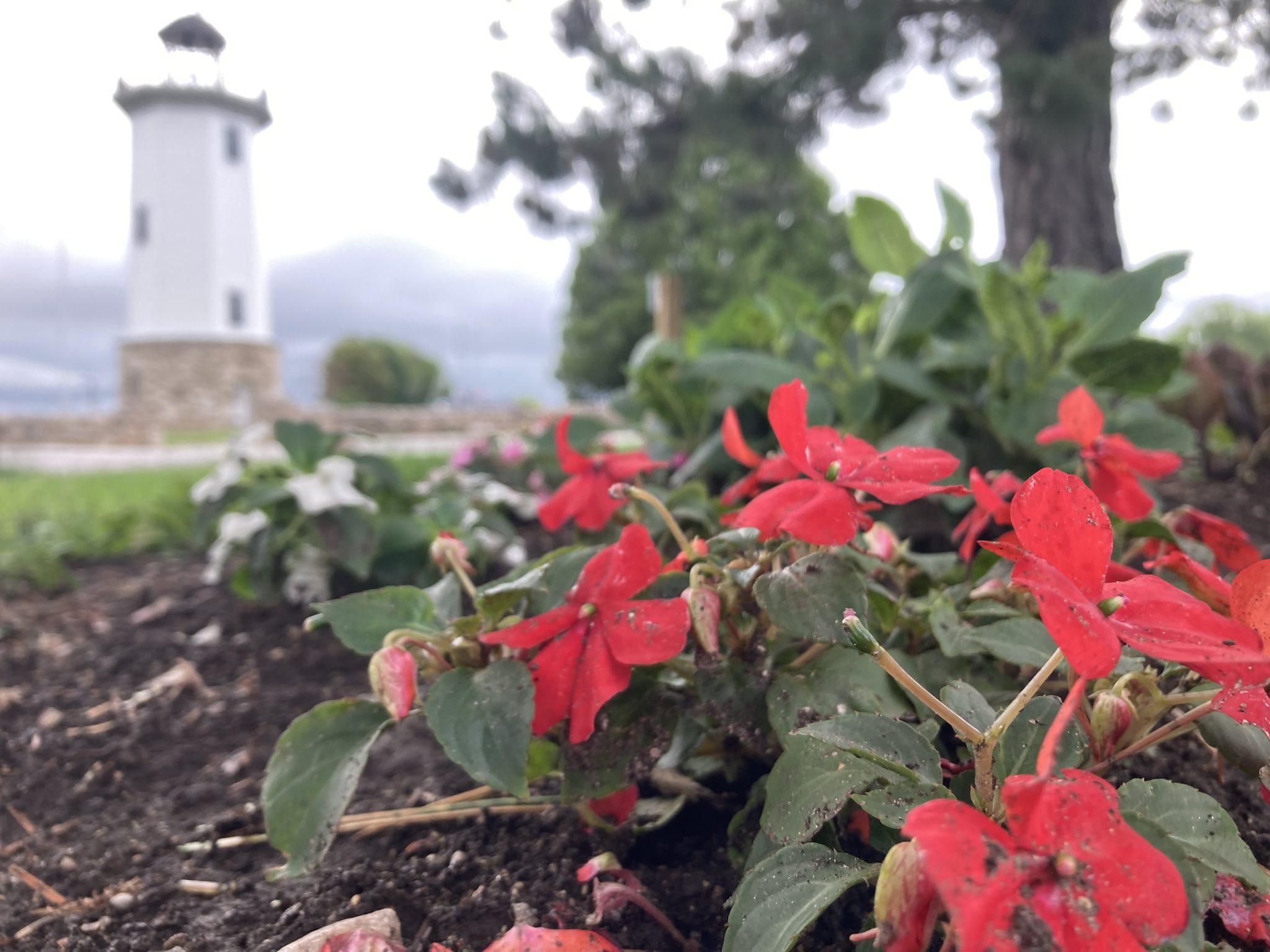
I started with way too much contintental breakfast coffee and the Fond du Lac Lighthouse in Lakeside Park. Notice I don't have a number next to the name-- that's mostly cause I'm not exactly sure which 'number' light this is for me, since I've been coming here since I was very small. As with most of the lights on Lake Winnebago, it's relatively young, built during the Great Depression and has served as a major motif for my grandparents and great grandparents since then, who all grew up in Fond du Lac. The best painting I've ever done was of this lighthouse, and it's hung in my grandmother's bedroom for about a decade now. I've climbed it many times before, but the tower doesn't open until 8 and I was here a bit after 6am, so today was just pictures.
Rockwell Lighthouse (70), Asylum Point Lighthouse (71), and Neenah Lighthouse (72)
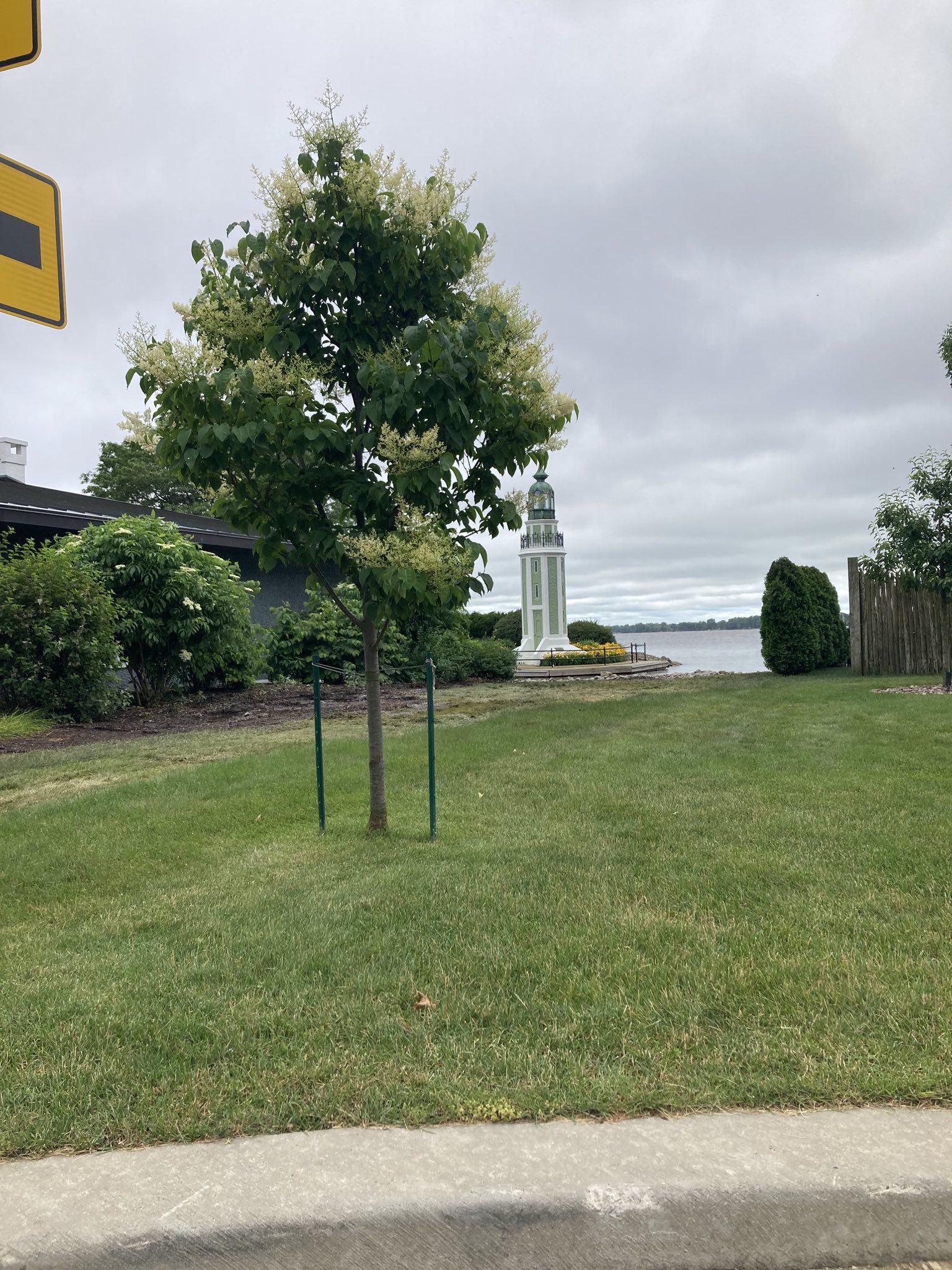
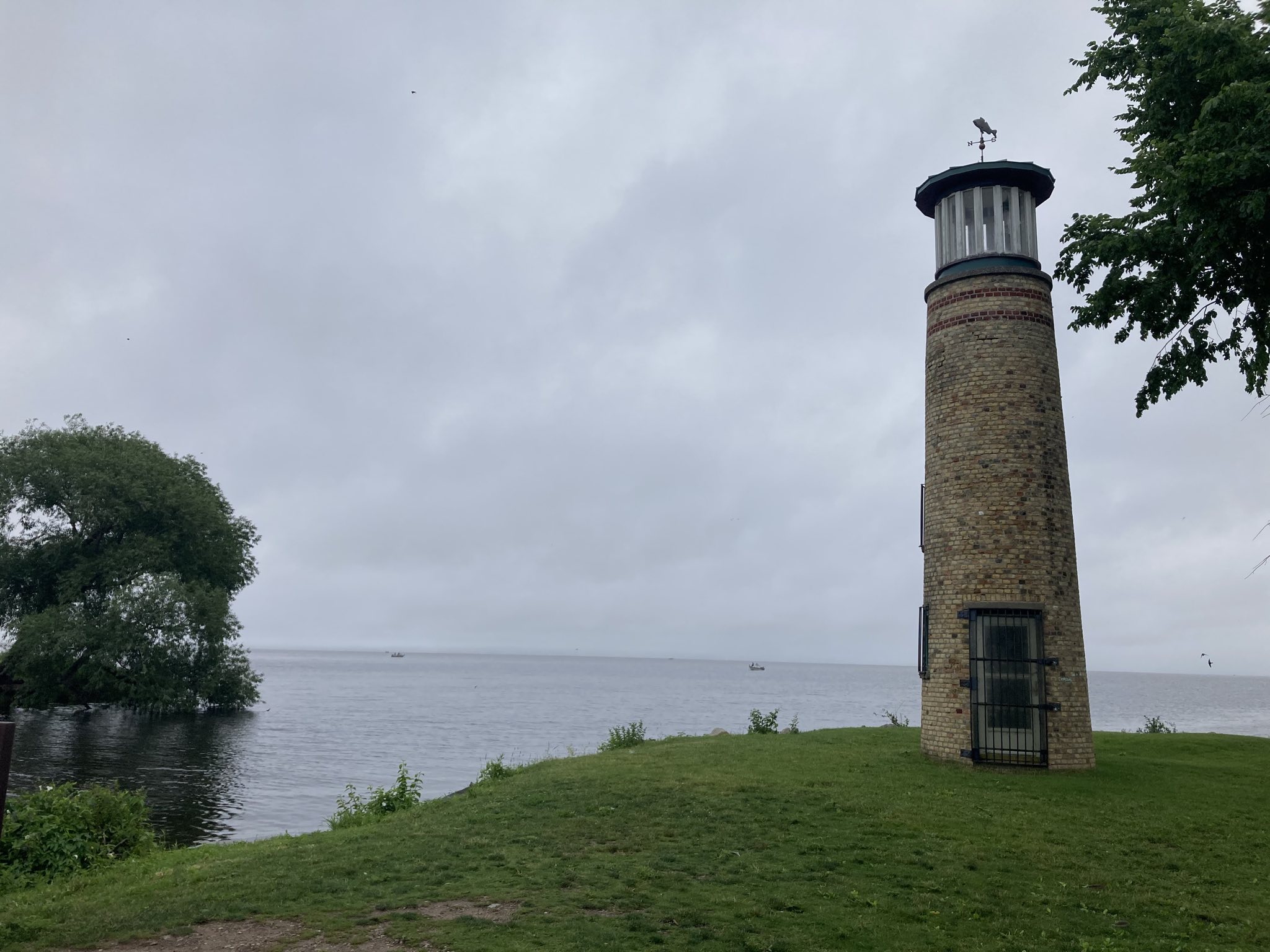
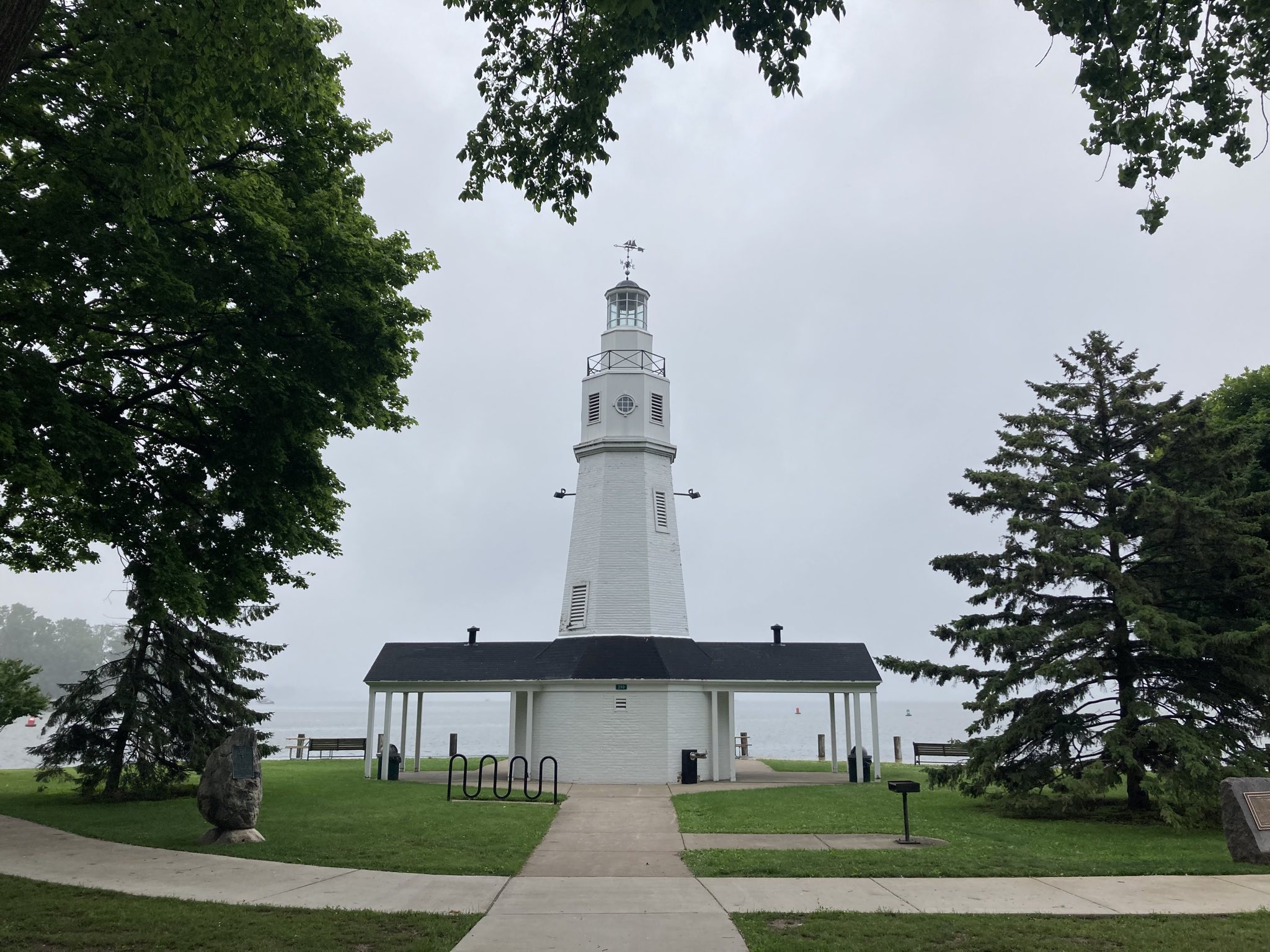
These next couple lights follow the standard Winnebago pattern-- small lakeside lights mostly built by private individuals, a couple of which managed to receive government funding for a bit, but serve more as symbols for the local towns than serious navigational aids. I don't have much to say about these three, but each of them looked pretty incredible backdropped by the misty morning coming off of the lake.
Grassy Island Range Lights (73)
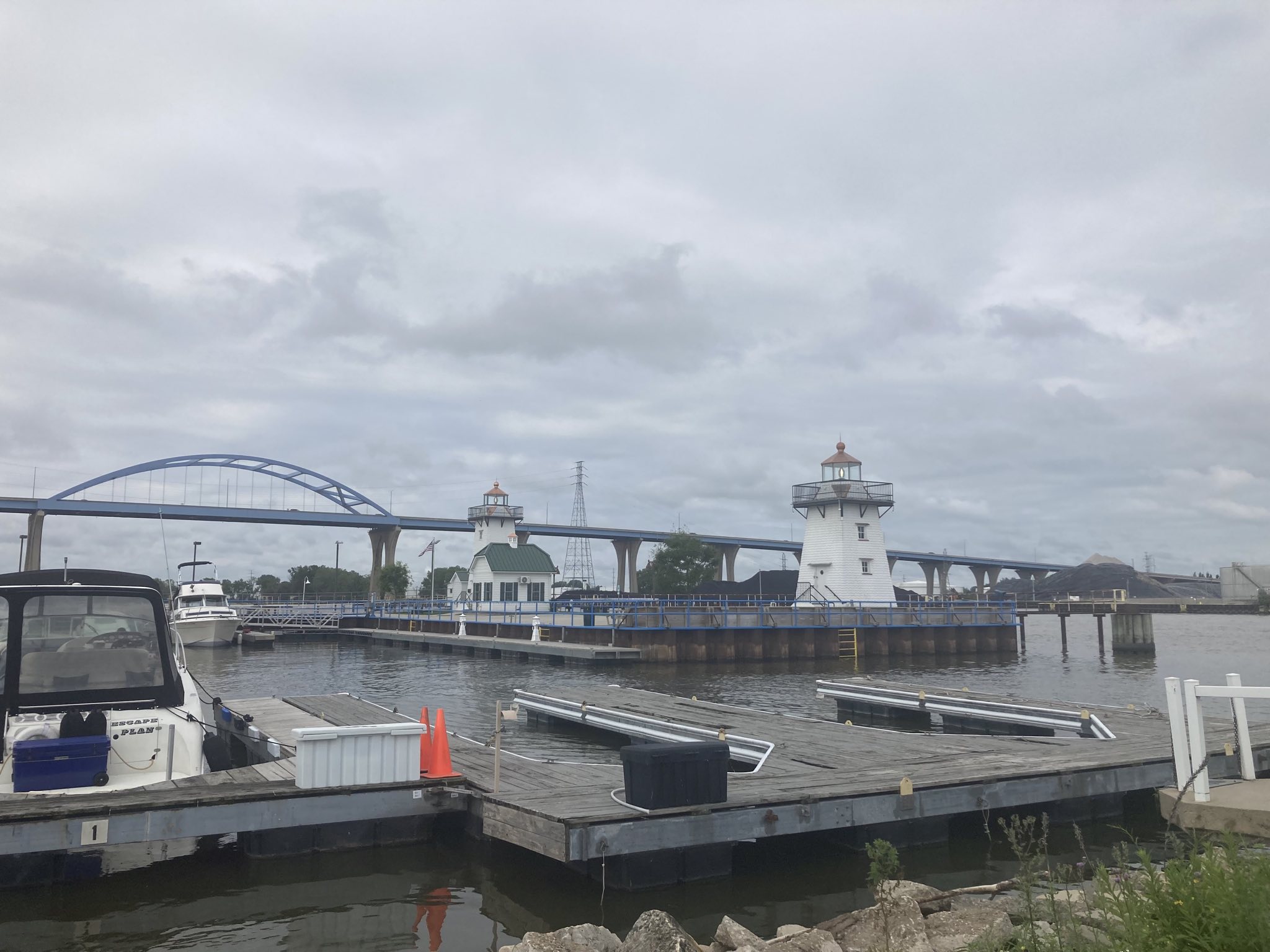
After circling the western side of Lake Winnebago, I followed the Fox River up to Green Bay, a city I haven't visited in probably 15 years. The Grassy Island Range Lights are a system of range lights that were originally on the eponymous island, but after falling into disrepair were saved by the Green Bay Yacht Club and moved to their marina. Around the marina are tons of warehouses and plants for Green Bay Packing-- I'm glad the city is still close to its roots. The lights themselves are visible from the marina, but I didn't see a way to actually approach them without getting permission from the club. I was under the impression that they can be toured with prior permission, which I didn't have.
Sherwood Point Lighthouse (74)
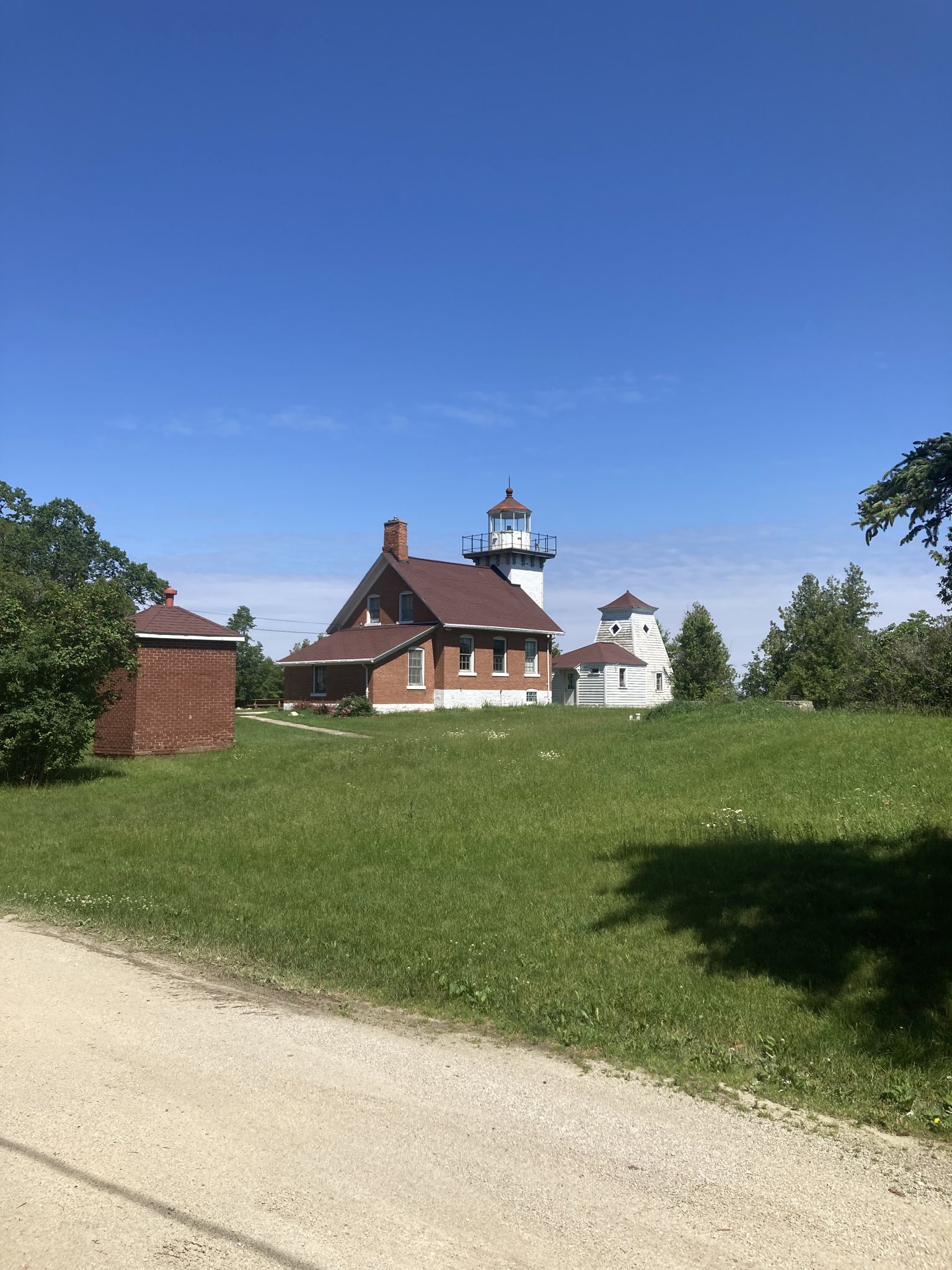
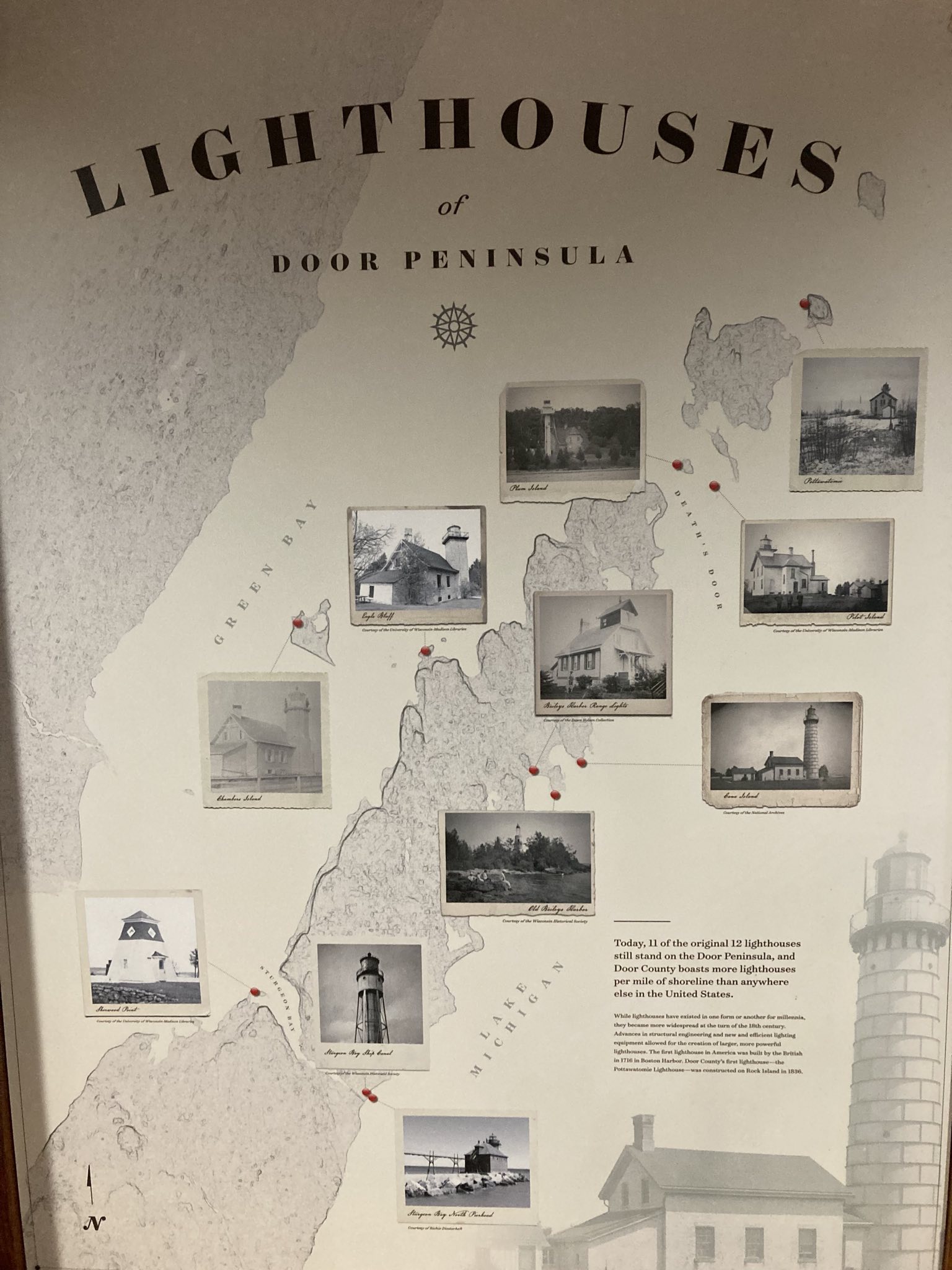
Welcome to Door County! It's hard to liken this area to any other in the country that I've been to-- maybe New Jersey, if New Jersey was in the midwest? My first Door County lighthouse was a tricky one, as it's tucked away on dirt roads through the Idlewood forest where there isn't really any signal for navigation. I can't say I was incredibly comfortable driving through a dense forest with random Trump flags hanging from trees over the road, but eventually we hit a clearing on the cliff with a US Coast Guard sign warning any who might approach the property. As far as I know, the only ways to access this light are a) come during the Door County Lighthouse Festival or b) join the Coast Guard. Unfortunately, neither applied to me, so I just took a few pictures from the road and moved on.
Sturgeon Bay Canal (75), Sturgeon Bay Canal Pierhead (76)
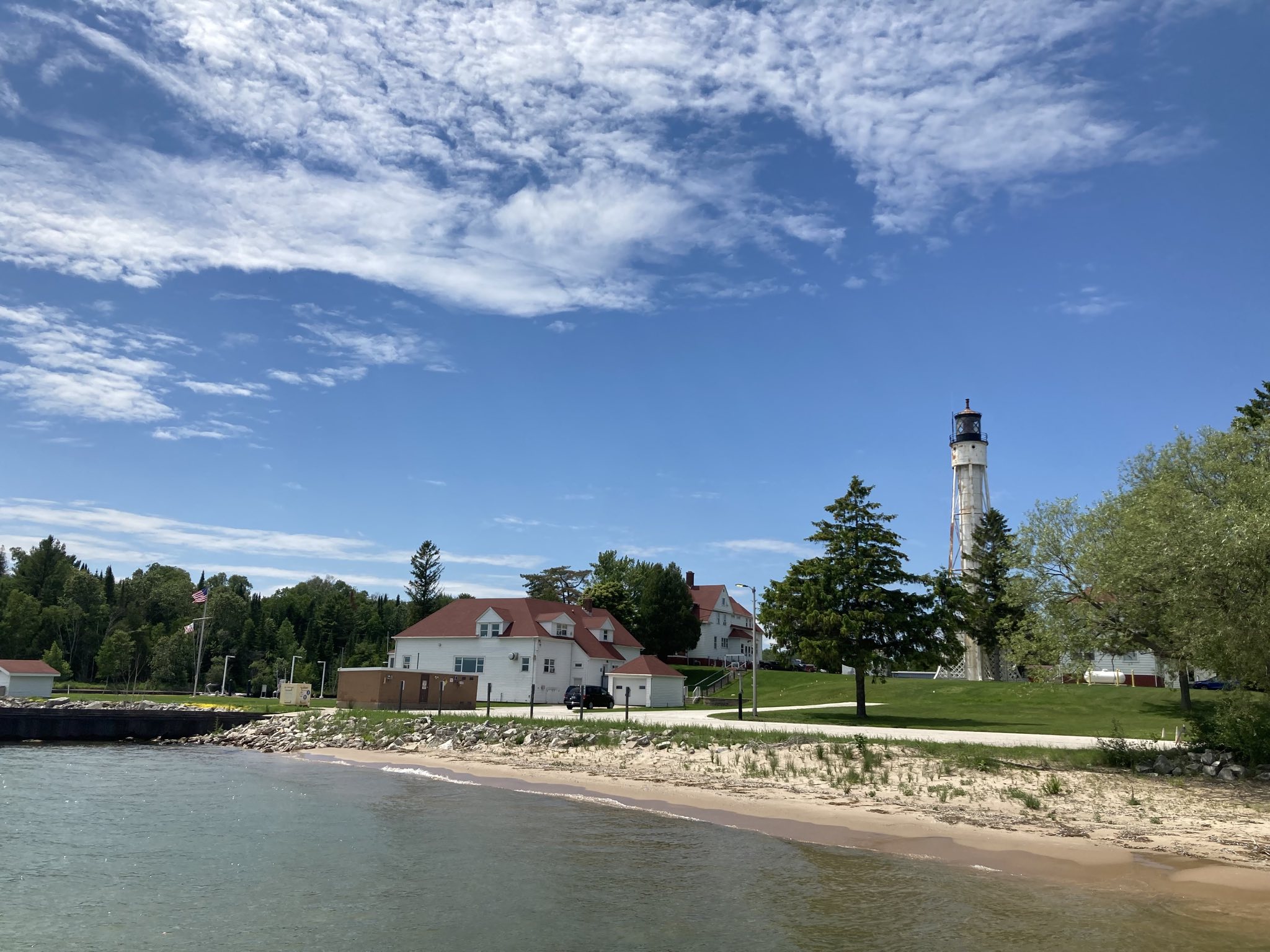

Sturgeon Bay is the largest city in Door County and guards its entrance against those who come by land. It's a big shipbuilding town, famous for its canal that was dug through in the 1870s. A little bit of history real quick-- to get goods from Lake Michigan to Green Bay, you had two options-- go all the way around Rock Island, or go between the mainland and Washington Island through a passage known as Death's Door (the namesake of the county!) As many captains weren't fans of inefficient pathing or dying, a third solution was sought out-- the construction of a canal that cut from Lake Michigan to Sturgeon Bay, a bay along Green Bay. Makes sense I hope? The canal was pretty tight, so the government set up the Stugeon Bay Canal North Pierhead lighthouse to help guide ships a bit better, which unfortunately wasn't enough, and a few years later a much taller lighthouse was built right on the shore. The taller lighthouse's station is now an active Coast Guard base, so you can't get too close, but the Pierhead light was auctioned off a few years ago and you can get close to it by walking down the pier. On a sunny day, both lighthouses make for some incredible photo opportunities, and were some of my favorites to photograph of the entire trip. Beyond this, I also went to the Door County Maritime Museum in Sturgeon Bay, which was fine, and had some neat exhibits about shipbuilding and Door County's history. Notably, the museum has a stamp for every lighthouse in the county if you collect those. One of the museum staff insisted on lunch at a little patio where I had a delicious veggie wrap with cherry jam (Door County is very famous for its cherries) and a Spotted Cow.
Baileys Harbor Range (77)

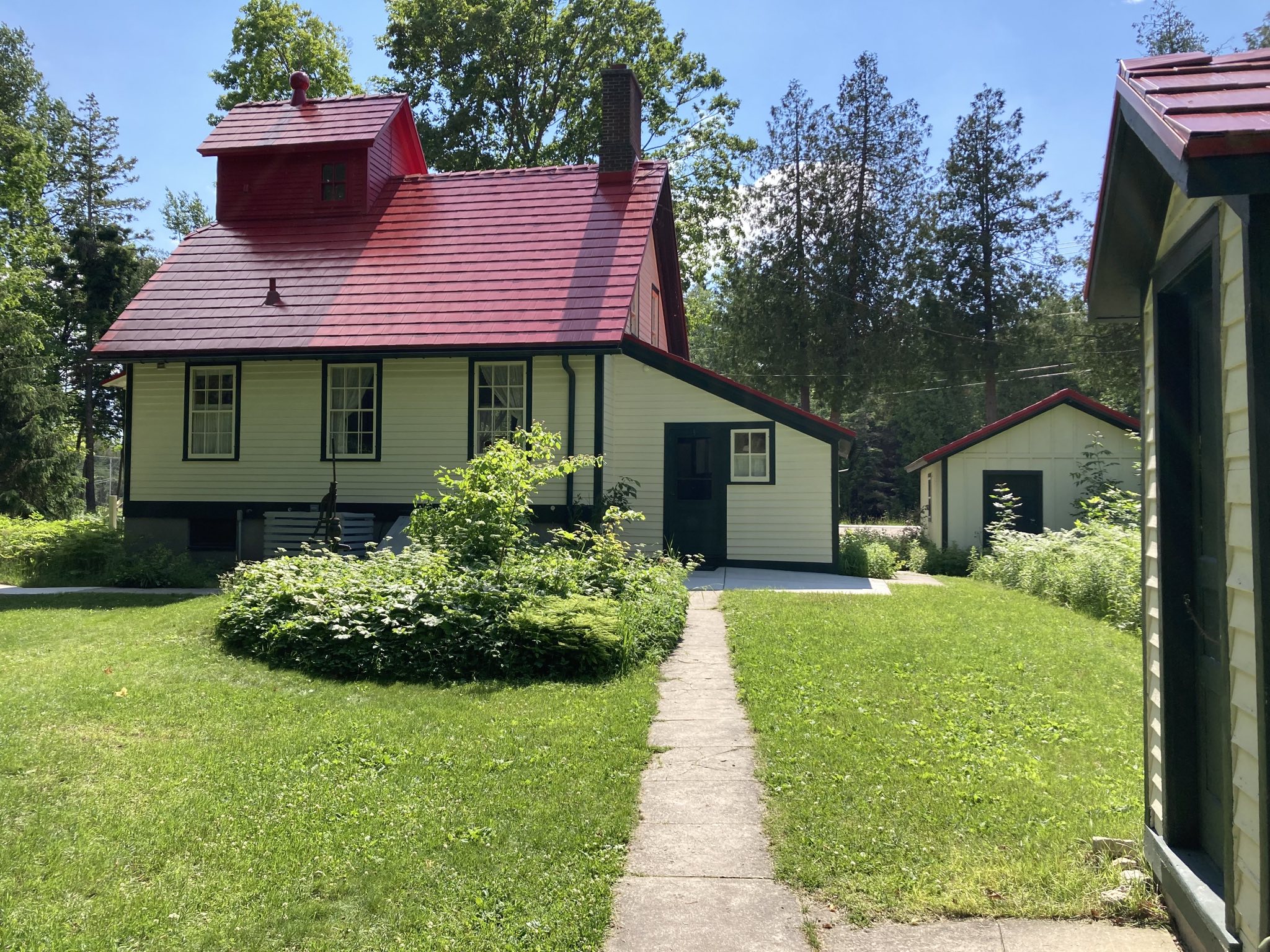
After leaving Sturgeon Bay, my next stop was Baileys Harbor, the previous largest town on the peninsula before Sturgeon Bay's shipping industry blew up. This little town was one of my favorites in the county, and I'd heavily consider staying here next time I'm in the area. The beaches on the lake side are much nicer than the bay side, and this town is just delightfully quaint. Anyway, just past town are the Baileys Harbor Range lights, a real treat for pharologists because (as far as I'm aware) these are the only range lights in the country that are still active and in their original positions. Range lights are pairings of lighthouses, a tall one and a short one, that are used to mark a channel. From the boat's perspective, if the light from the tall lighthouse is positioned directly above the light from the short lighthouse, then you're in the safe channel. These two range lights are extremely well preserved, and have a nice boardwalk spanning the distance between them. There are a ton of hiking trails branching off from this boardwalk, and if I had more time I would have loved to stay and wander around.
Old Baileys Harbor Lighthouse (78)
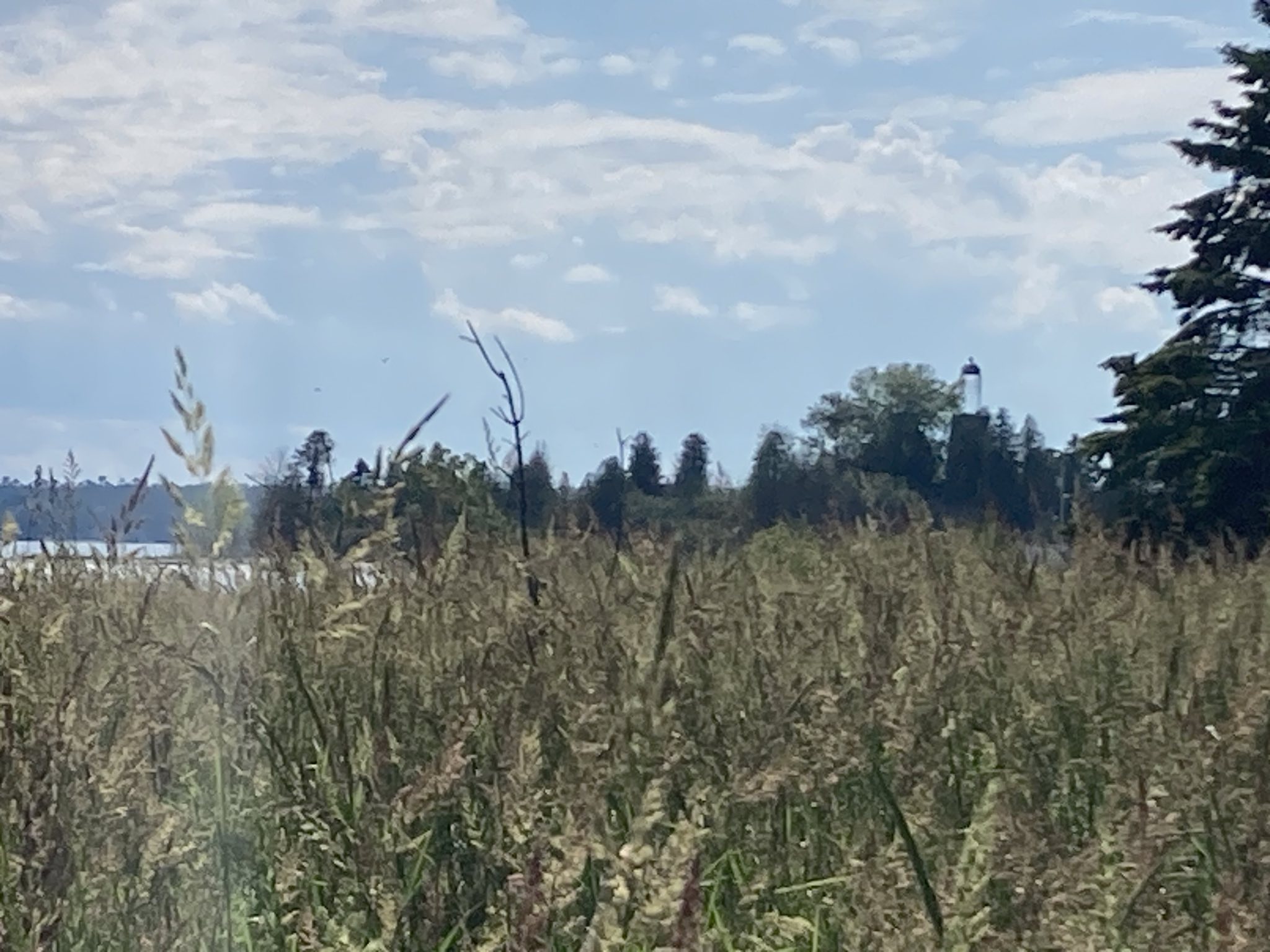
Just a bit east of Baileys Harbor Range is an island housing the Old Baileys Harbor Lighthouse, and even though I wasn't able to get close (the island is obviously an island, and private property at that) I still think it's worth talking about because of its extremely rare bird-cage style lantern. The most famous piece of lighthouse technology is probably the Fresnel lens, but prior to the 1850s, lighthouses used a variety of far less effective strategies to provide a light. Because the structure's lantern back then wasn't defined by the size and shape of the Fresnel lens, there was a variety of different styles and architectures used-- one of which was the bird-cage style, named for looking similar to a classic metal bird cage. When the Fresnel lens took off, all active lighthouses had their lanterns rebuilt to fit the new Fresnel lenses. The exceptions, of course, were the lighthouses that weren't active at that time. Old Baileys Harbor had just been replaced by the aforementioned range lights down the street, and so its lantern was never rebuilt accordingly. As far as I know, there are only 4 lighthouses that still have the old birdcage style lantern, and three of them are on the Great Lakes. Not many that were officially retired before the advent of the Fresnel lens are still standing.
Cana Island Lighthouse (79)
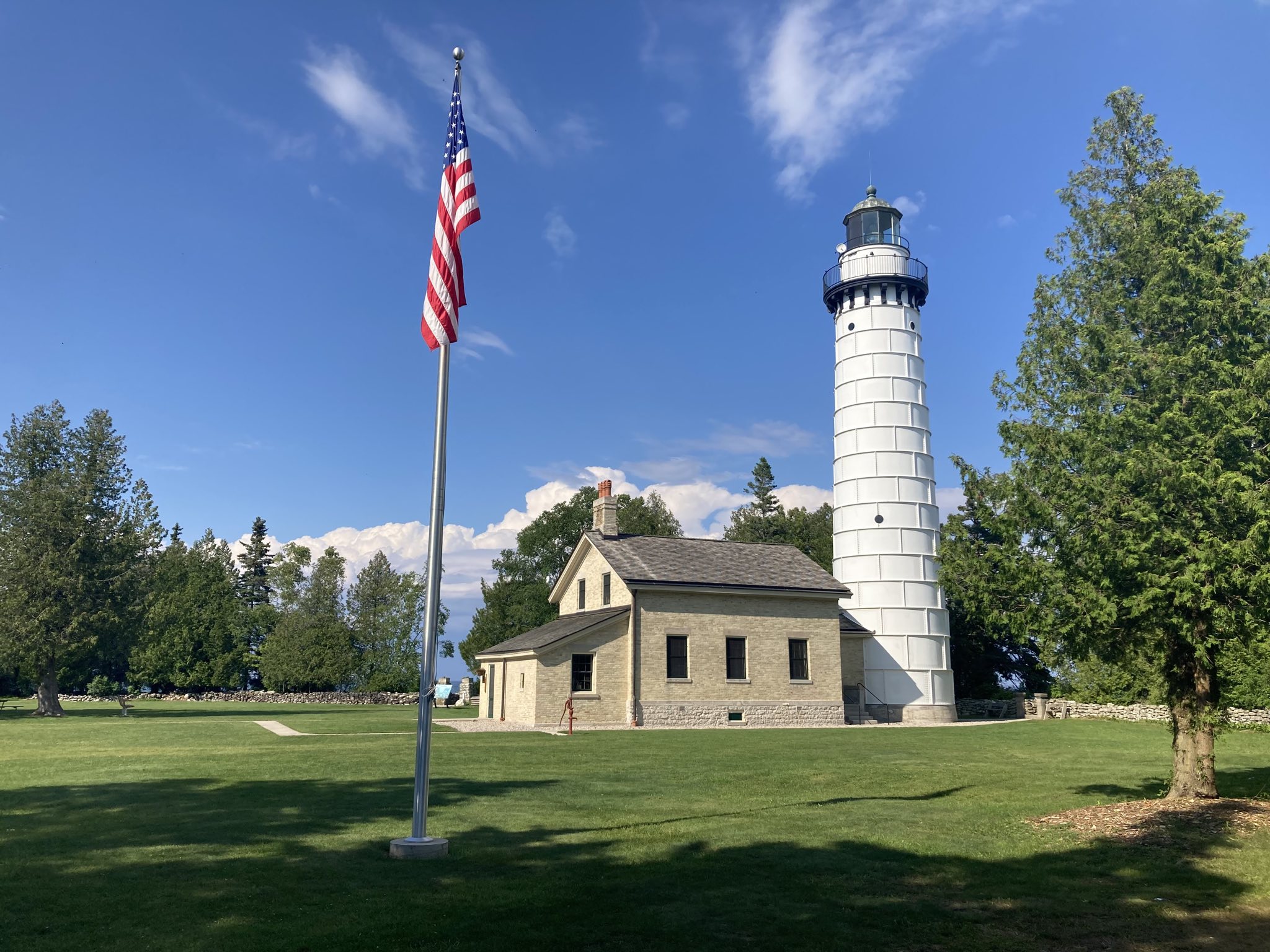
From Baileys Harbor it's a quick drive north to Cana Island. If you visit one lighthouse in Door County, it's this one. Heck, if you visit one lighthouse in Wisconsin, it's this one. First of all, Cana Island is an island, and it's not the kind that has a bridge. You park on the mainland and you walk across a causeway if the lakewater is low enough, you wait for someone driving a tractor if it's up to your shins, and you come back another time if it's up to your thighs. Fortunately, I was able to get across with minor dampening of my shoes. The island is very well maintained, with several buildings to explore. The lighthouse is about 85 feet tall and offers a spectacular view of Lake Michigan and basically all of Cana Island, and is one of the more comfortable lighthouses I've climbed in my time. The keeper's quarters was my favorite part though-- a lot of times I find that the keepers quarters serves as a generic lighthouse/local maritime history museum, with rooms converted to exhibits, but the quarters on Cana Island was set up 1:1 with a classic early-1900s keeper's cottage. It really felt like a step back in time. I was enamored, and spent a solid hour wandering around and chatting with other Door County vacationers. One thing you'll learn about people in Door County is that everyone has been coming here for 20 years, and everyone is ready to tell you exactly what you must do, and must see, and must eat. It's great.
Eagle Bluff Lighthouse (80)
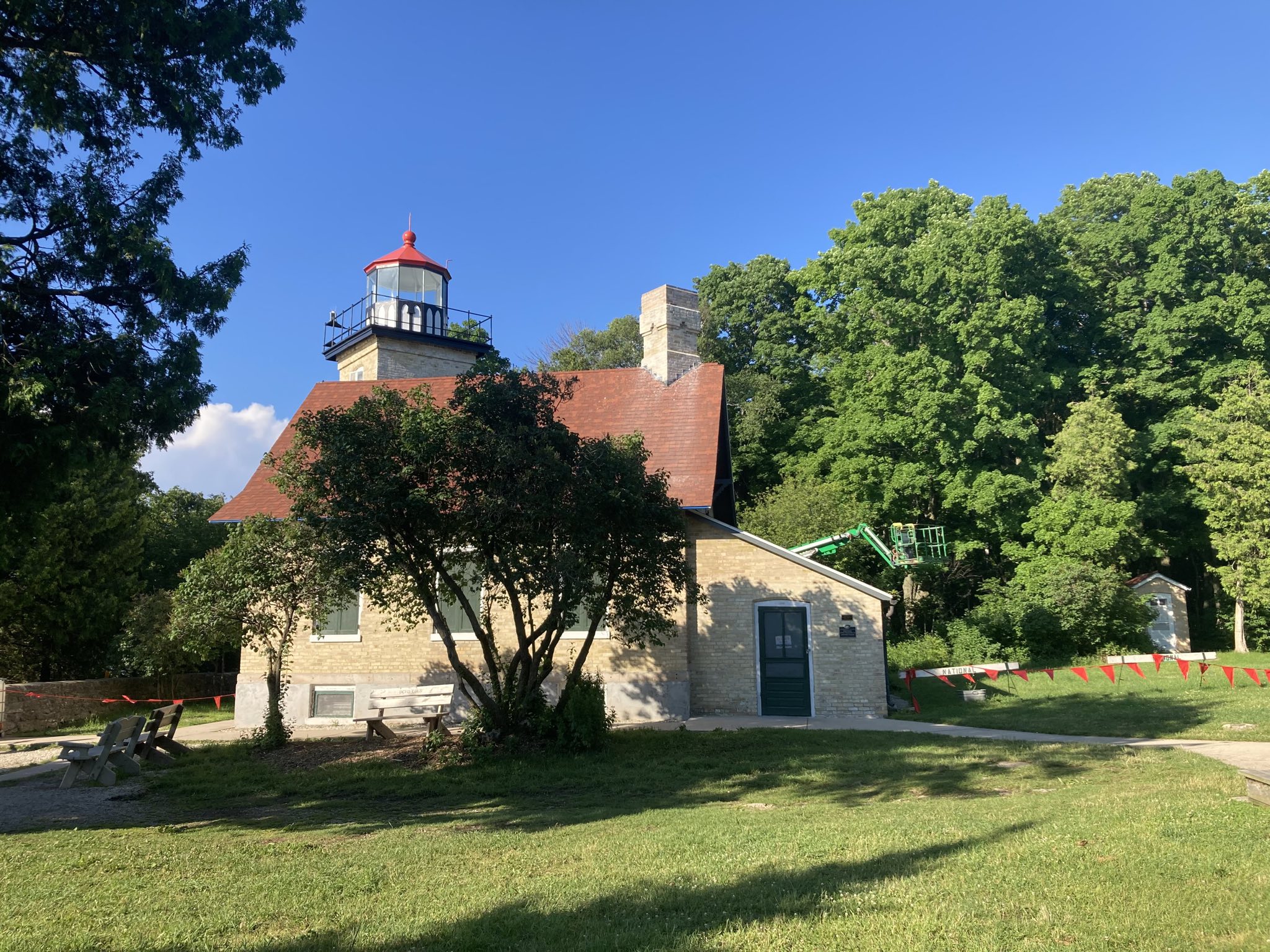
At this point, the sun was getting low in the sky and I headed over to Peninsula State Park, the largest state park in Wisconsin. There's a lot of cool stuff to do in the park, but I'd recommend the Eagle Tower, a pretty huge wooden tower that offers a great view of the area. Just beyond the tower is the lighthouse. It's currently undergoing renovations, and we came late in the day anyway, but it occupies a nice, secluded area overlooking the Strawberry Islands. Ships traversing this side of the peninsula could either go around Chambers Island or go between the Strawberry Islands and the mainland-- the Chambers Island lighthouse catered towards the former group, and the Eagle Bluff lighthouse catered towards the latter. I'd love to come back in 5 or 10 years, because I foresee this lighthouse being extremely well put together then. It seems to be getting a lot of love from the community. If you think this lighthouse looks similar to Sherwood Point, you'd be spot on-- it's the same architecture, apart from a few minor changes to ensure a distinct enough daymark. After this I called it a day and headed to Sister Bay for dinner. I picked a small restaurant called Grasse's right on main street that had an unusually robust vegetarian menu for this part of the country, and I sipped on a Spotted Cow from a booth while watching the heavens open up on those casually milling about the town. Once the rain stopped I grabbed some ice cream from next door. Sister Bay is supposedly the best place to stay in Door County for first-timers, and I'd agree with the assessment.
Pilot Island Lighthouse (81) and Plum Island Range (82)
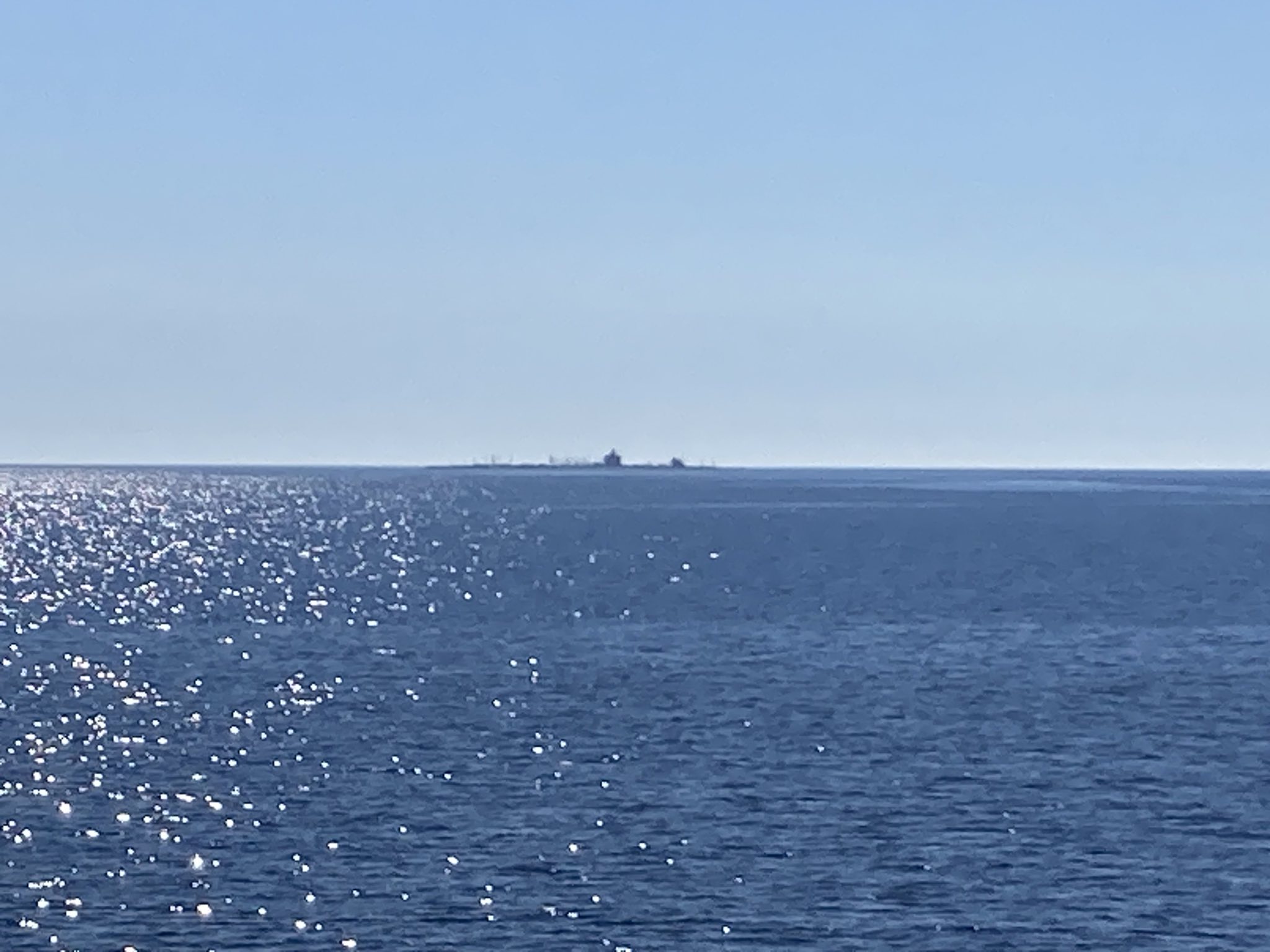
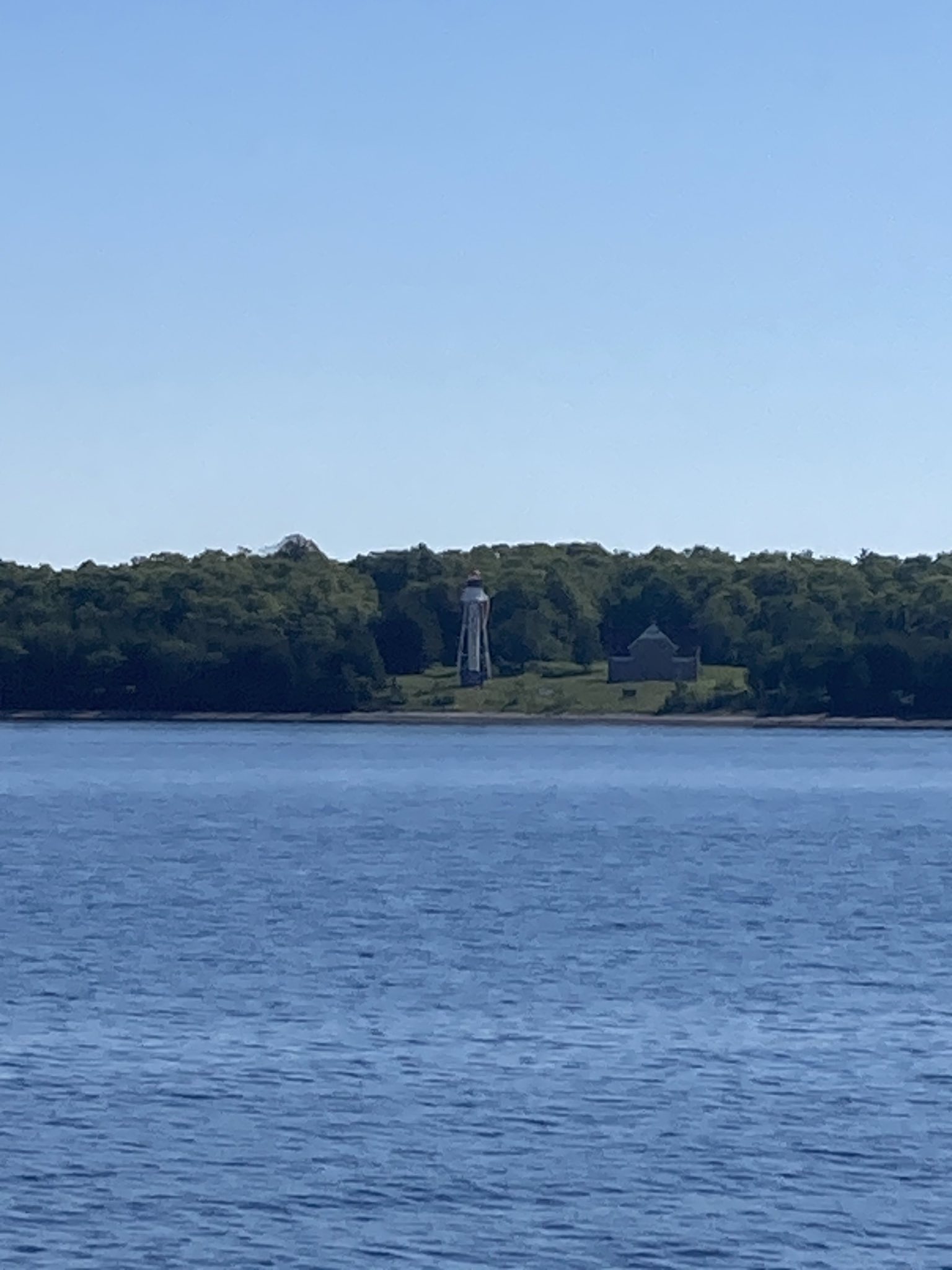
After spending the night in Sister Bay, I headed straight north to the end of the peninsula and took the car ferry to Washington Island across Death's Door. For the duration of the half hour ride you have a pretty good view of the two light stations of Death's Door, on Pilot Island and Plum Island. Pilot Island has been one of my favorite lighthouses since I was a kid, and I have a bunch of random stories about it rattling around in my head that I've read from various lighthouse books. My favorite, though, was that the foghorn on the island was so loud that the chicken eggs laid on the island wouldn't hatch. Anyway, the Coast Guard abandoned the island shortly after automation of the light, and now the only visitors are seabirds. The sheer amount of bird feces has killed most of the vegetation on the island, leaving the outline of the small lighthouse, some naked tree trunks and some low shrubs against the horizon. For whatever reason, I'm personally invested in Pilot Island's restoration, and hope some progress gets made soon. The other island on the channel, Plum Island, hosts a range light that I don't have much to say about. There used to be a lifesaving station on Plum Island, but it was moved to Washington Island across the channel at some point.
Pottawatomie Lighthouse (83)
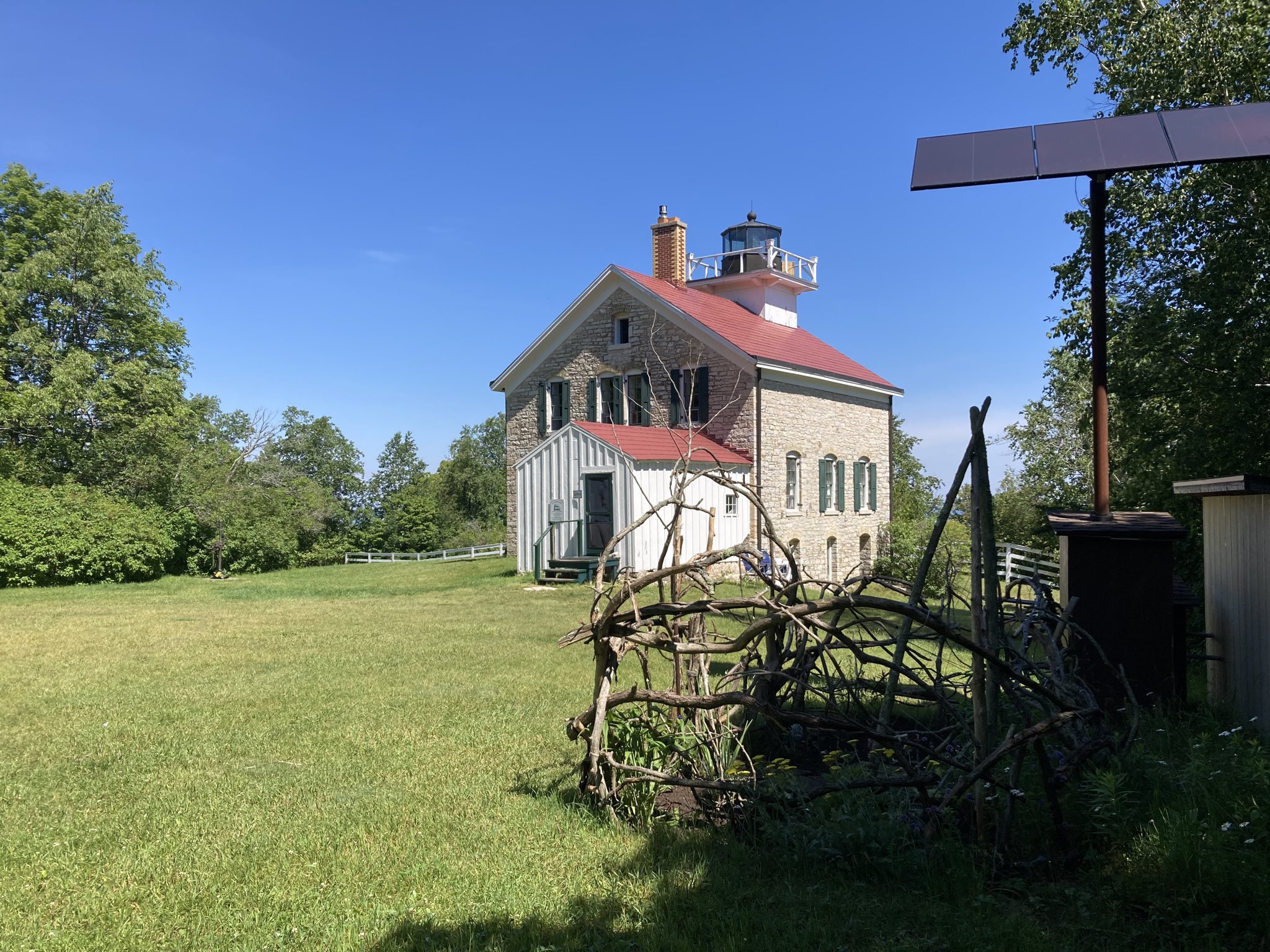
Having arrived on and subsequently crossed Washington Island, I took a small pedestrian ferry out to Rock Island. Rock Island is a tiny, some 900 acre island at the very tip of Door County with no inhabitants beyond a few campers and a park ranger. Much like a lot of islands in the Great Lakes region, it was inhabited once by villages of fishermen that slowly disappeared as the local economies changed, leaving nothing but ruins on the east side of the island. The west side, however, boasts Wisconsin's oldest lighthouse, built in 1836 back when Wisconsin was just a territory. The mile and a half hike from the dock was actually pretty tough because of all the rain and mud, but it was quiet and pretty, so no complaints. Upon arrival at the lighthouse I was greeted by an unexpected live-in volunteer keeper that was beyond excited to have a visitor, and she explained the history of the lighthouse, the area, and some of its notable keepers. The lighthouse is perched on a sheer cliff face high over Green Bay, with some very steep stairs descending to the rocky beach below. Unfortunately, I asked a few questions too many and ended up missing the boat back, so I spent an extra hour sitting on a bench near the dock watching pelicans fish the lake. Upon returning to Washington Island, I took a friend I made at Cana Island's recommendation to visit (probably the only) restaurant in Jackson Harbor, Jackson Harbor Soup. I made a friend from Minnesota and one from Kansas City, and both excitedly told me about all the things I should do in Door County since this was my first time. I didn't tell them I was on my way out, cause I was pretty invested in their recommendations. The beer cheese soup was fantastic, and I ate it outside right on the water, and drank an absolutely stellar cherry beer.
Algoma Pierhead (84), Kewaunee Pierhead (85), Two Rivers (86), Manitowoc Breakwater (87), Sheboygan Breakwater (88), Port Washington (89), Port Washington Breakwater (90), North Point (91), Milwaukee Breakwater (92)
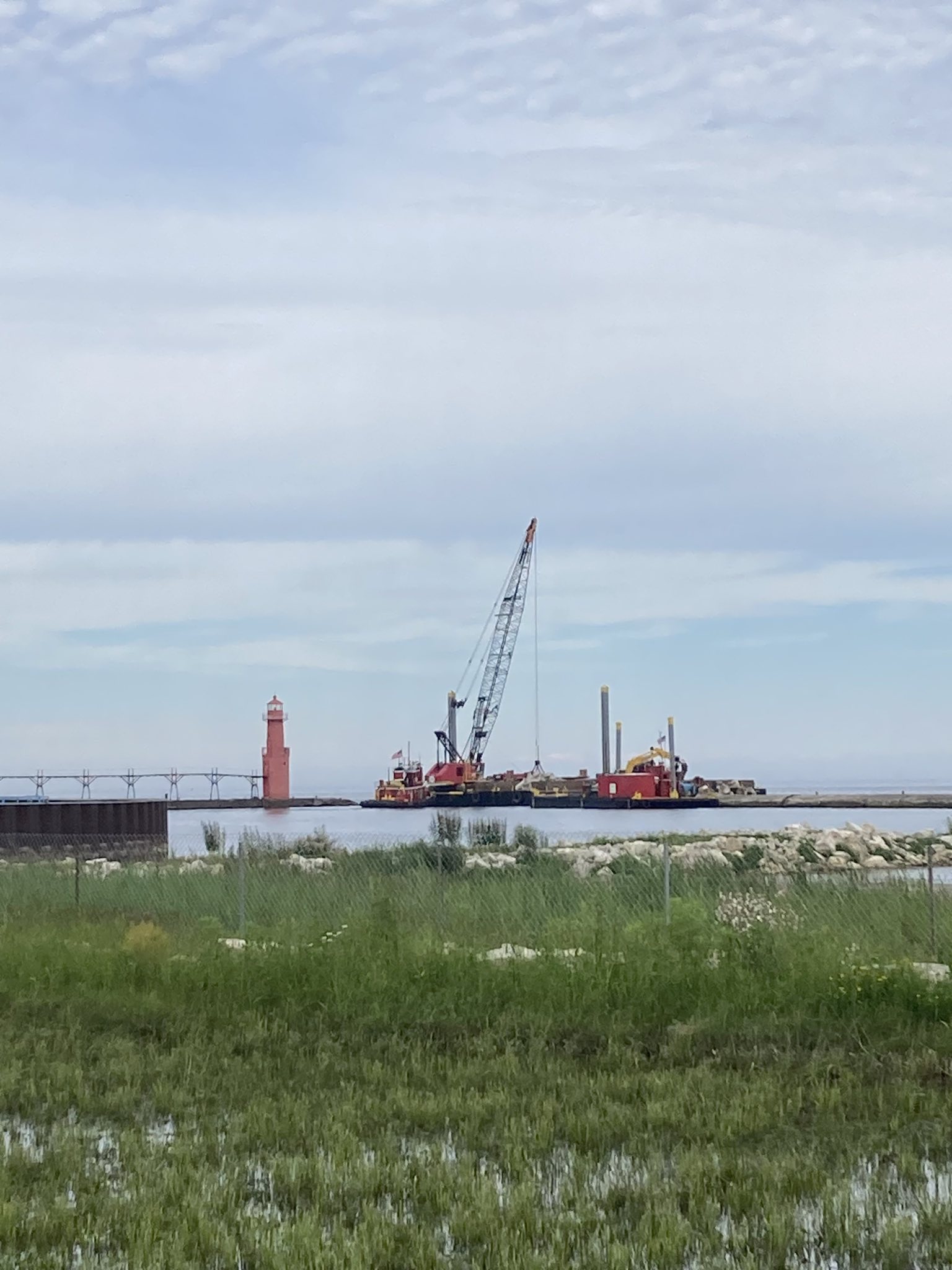
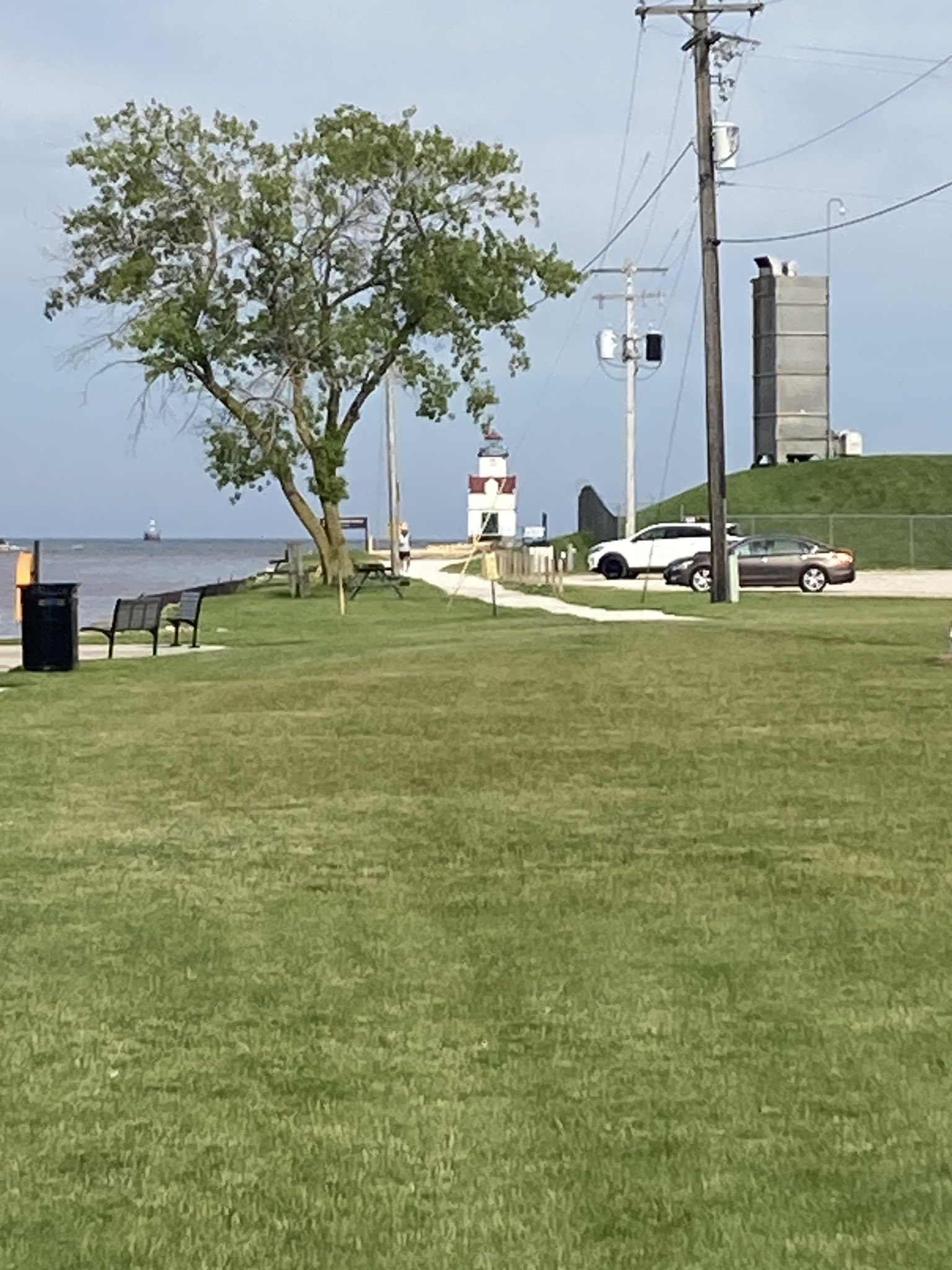
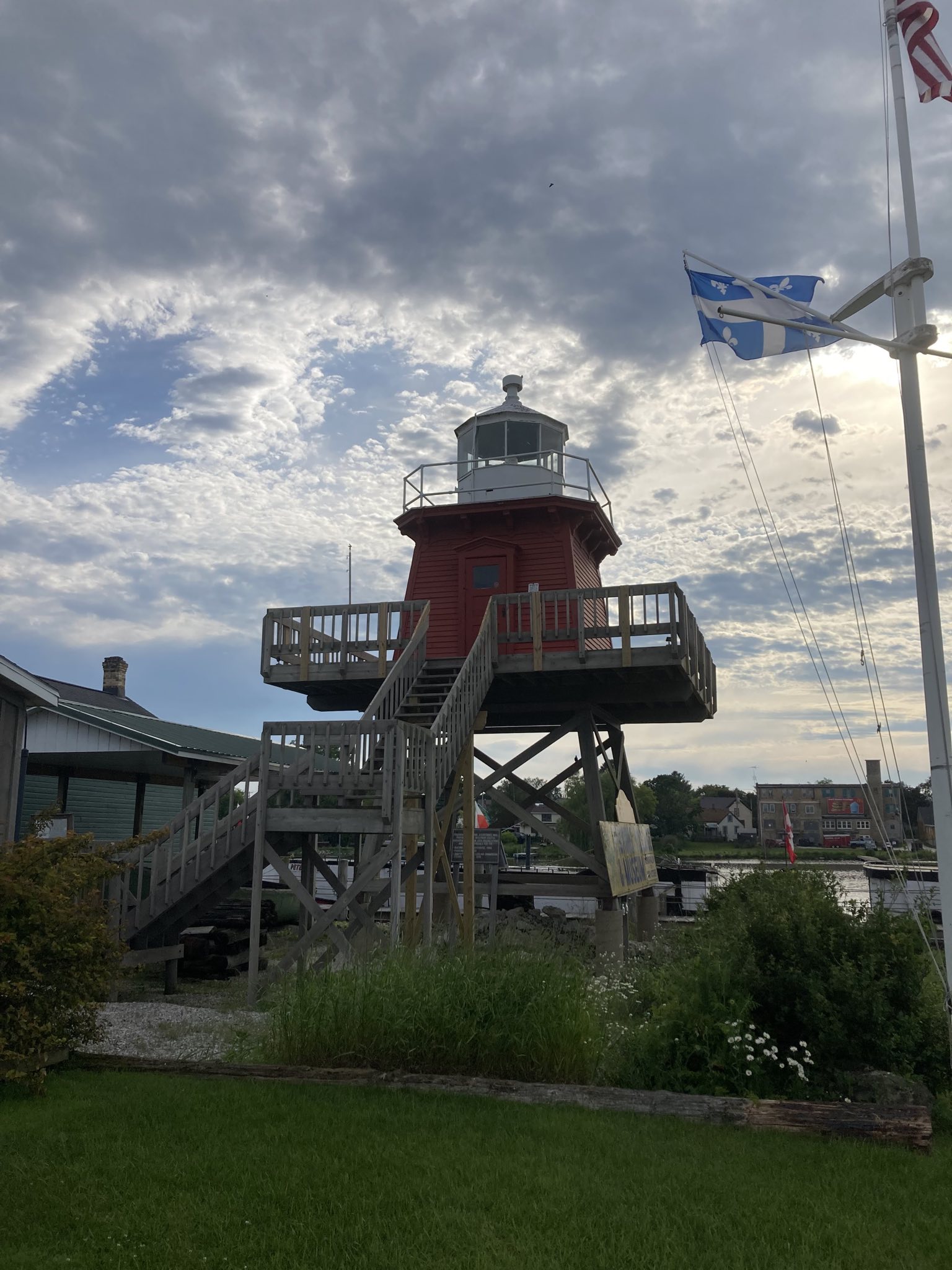
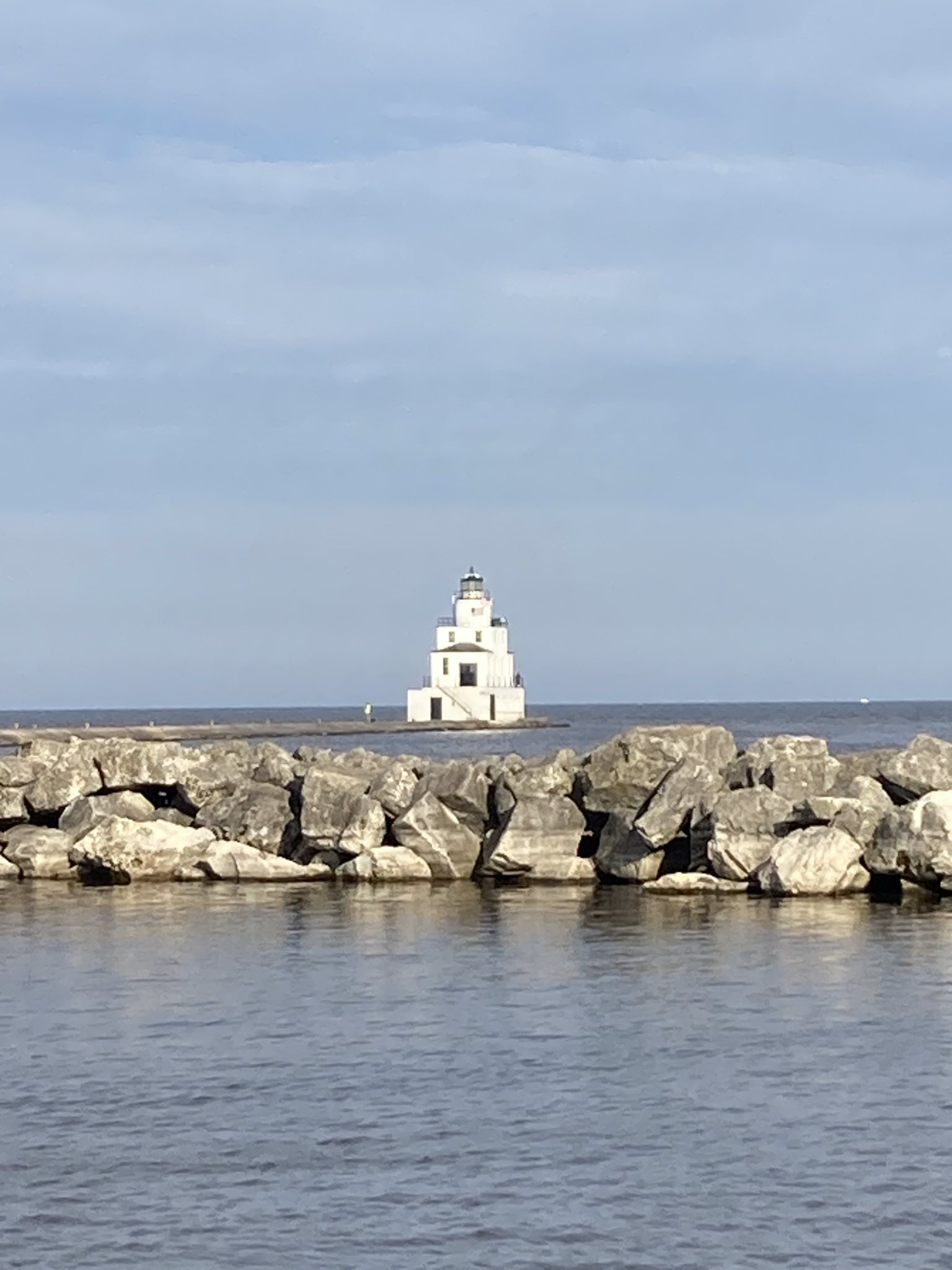
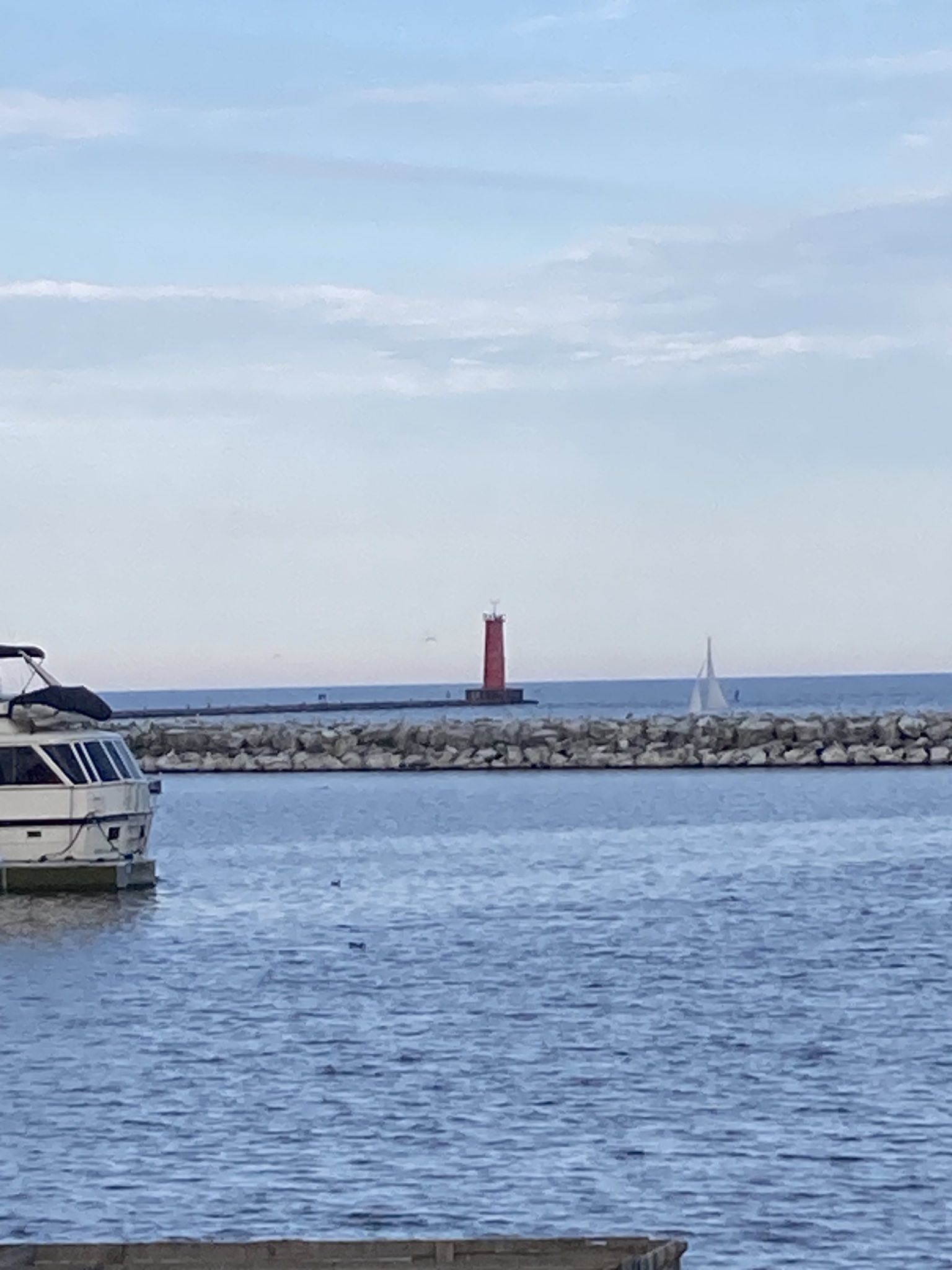
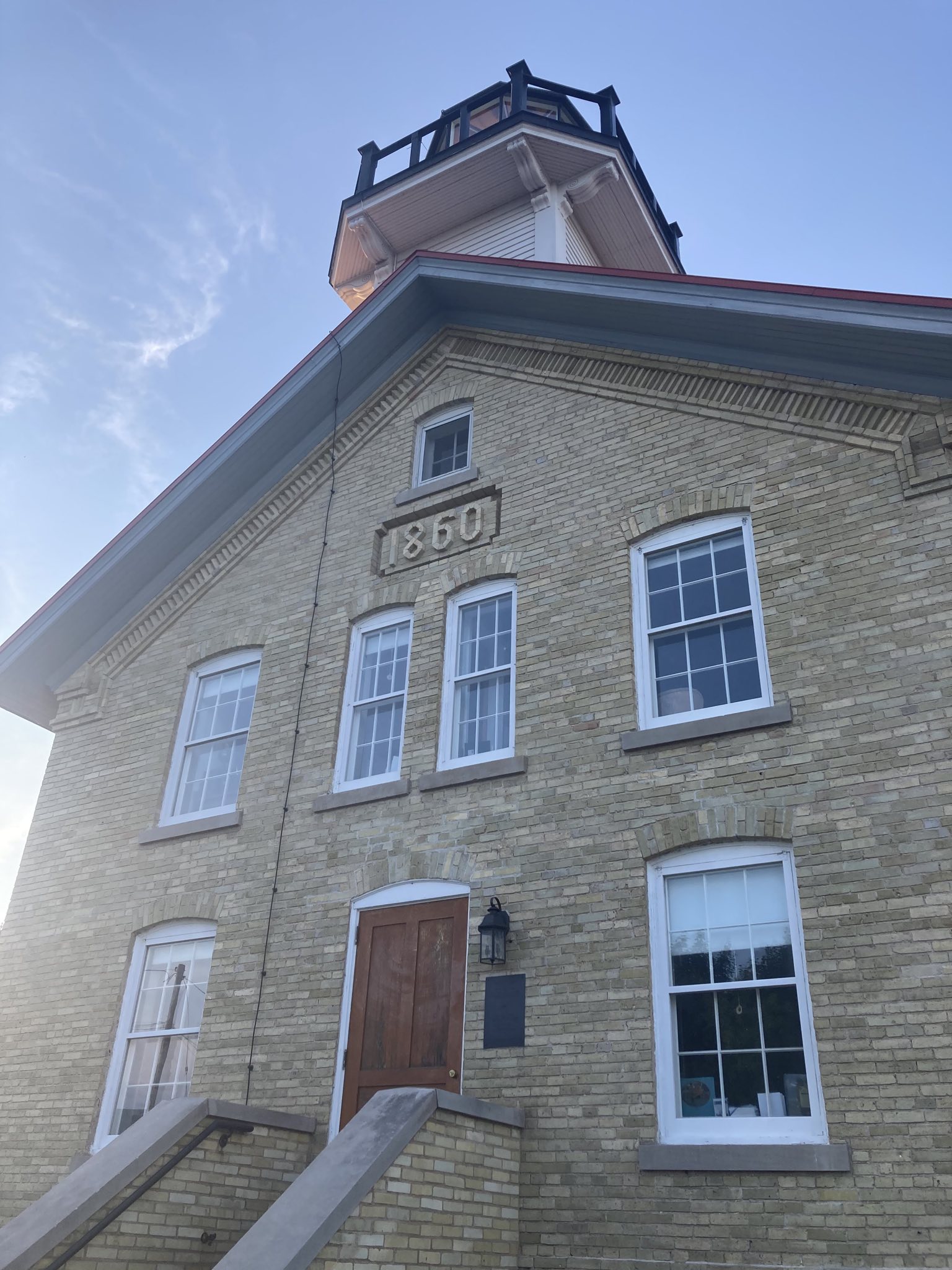
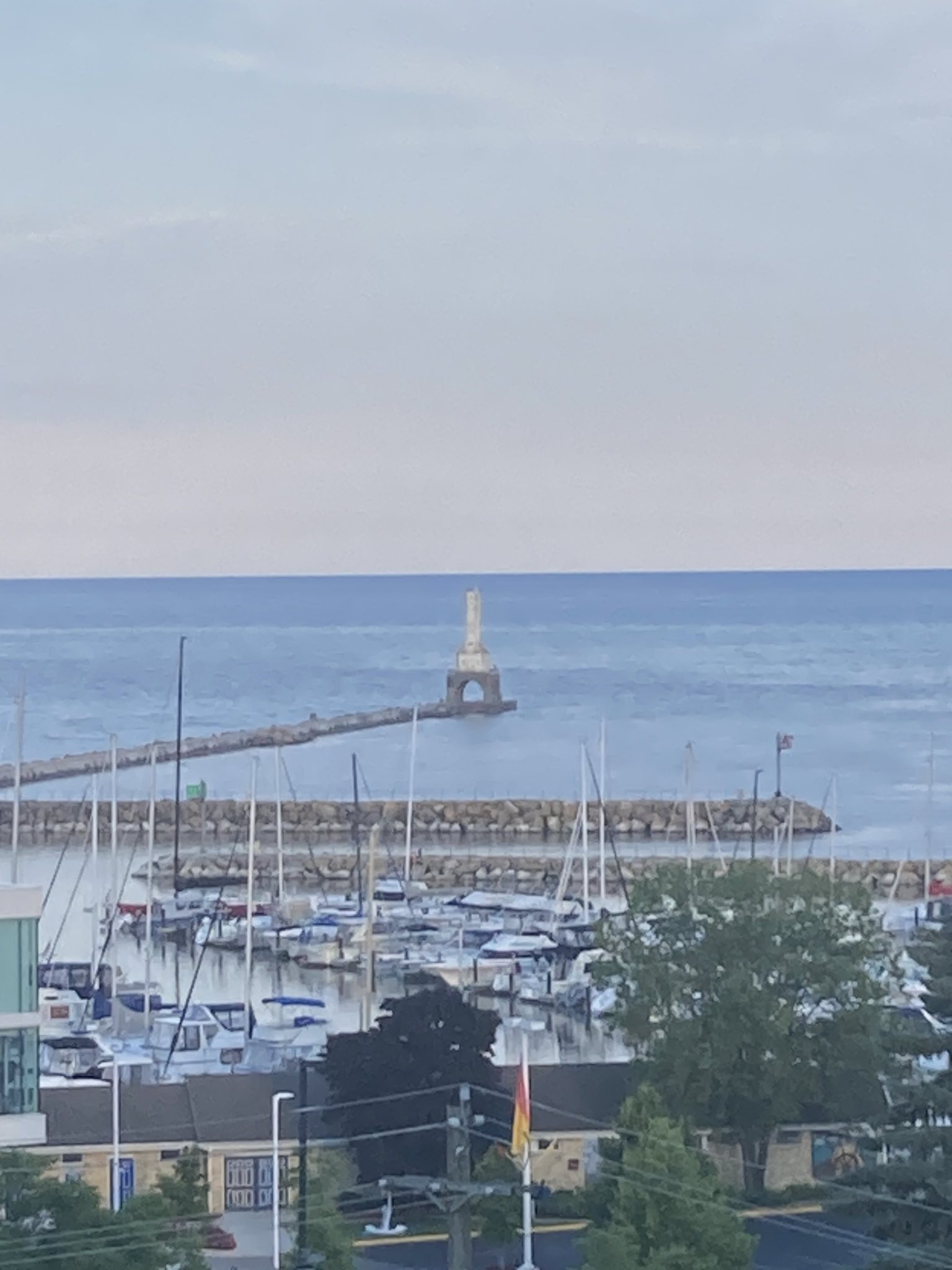
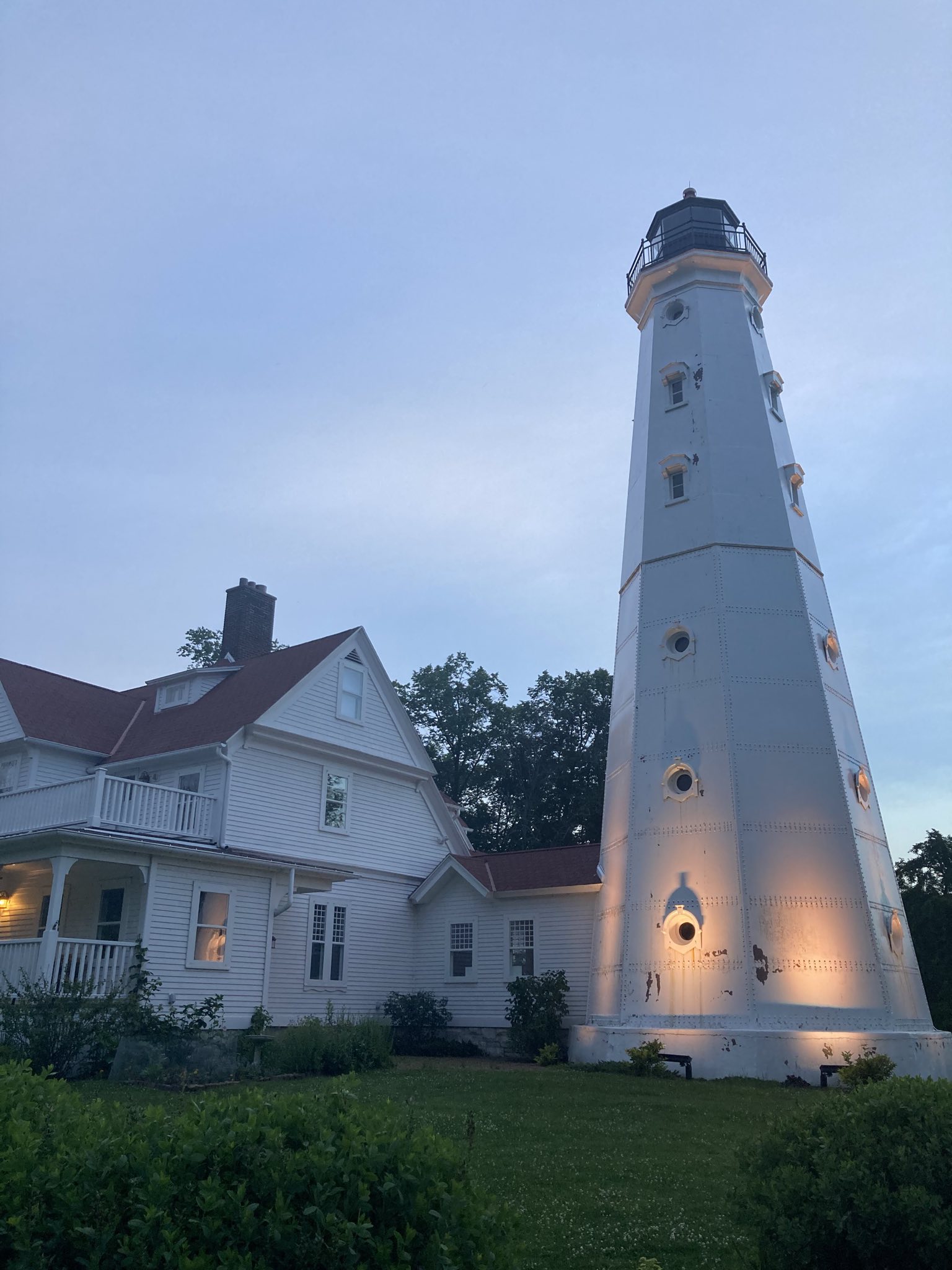
Thus concluding my time in Door County, I headed straight down the lakeshore back to Milwaukee. Most of the little towns on 42 have a little harbor, and most of the little harbors have a lighthouse, and so every 20-30 minutes I'd pull over and look at the harbor light, which was almost always a pierhead or breakwater. It was clear that every town was immensely proud of their lighthouse, as each of these harbor lights were kept freshly painted and were usually in the vicinity of a marina or park, and most towns tended to use the lighthouse in their local iconography. As you can tell from the pictures, most of these lighthouses I only viewed from a distance, and were I not so pressed for time I would have loved to walk down into the harbor and get closer. The highlight, I think, was the Port Washington lighthouse, which is not only positioned perfectly on a bluff overlooking the town for a *fantastic* view of the harbor (and breakwater light below) but whose volunteer husband and wife keepers came out to greet me dressed in 1880s costumes, despite it being long after visiting hours. North Point is another beautifully maintained lighthouse that I fully intend to visit and climb another time, and it's position in northern Milwaukee makes it super convenient.